
The boy from number five
In the working-class house I grew up in, a gift had one job. It had to be better than whatever the neighbour from number five got. Nobody asked whether it was thoughtful or whether I would love it. What mattered was the price, because the price was how you won. It was one-upmanship, keeping up with the Joneses, played out in wrapping paper.
I learned the rule early, and I learned what losing felt like too. Whenever the boy from number five unwrapped something better than mine, I didn’t feel lucky for what I had. I felt cheated, as if I had lost a race nobody had told me I was running.
Crash tests
His toy cars were the worst of it. They were better than mine, and I couldn’t bear that. Breaking them would have earned me a beating from my parents, so I found another way: I talked him into doing “crash tests” with them. His cars crashed, his hands did the crashing, and mine stayed clean.
I was a child, and I was already an expert at keeping score. The cars were never really about the cars. Every present in that street was a move in a game with the boy from number five.
The day the scoreboard got a name
The grown-up version of that game arrives every November, and it is called Black Friday. We are told the name comes from the day shops finally move from red ink into black. That story only took hold in the late 1980s, when retailers needed a happier version of a name that had started out as a complaint. In 1951 a factory trade magazine used “Black Friday” for the day after Thanksgiving because so many workers called in sick. By the early 1960s, police in Philadelphia were using it for the chaos that day brought: traffic jams, packed pavements, shoplifters, and in some years the crowds arriving for the Army-Navy football game. Local shops tried to rename it “Big Friday”. That didn’t stick, and in time the whole country got the polished version instead.
Even the length of the shopping season was arranged. In 1939, President Roosevelt moved Thanksgiving a week earlier, partly to give shops a longer run up to Christmas. A day built on crowds, sick notes and clever marketing feels familiar to me. It was a crash test of its own, with someone else’s hands on the cars.
A smaller word
These days I chant and meditate, and an old word from early Buddhism, kept in the Pali texts of the Theravāda tradition, keeps finding me. The word is dāna. It simply means giving, generosity, and what strikes me about it is how small it is allowed to be: a bowl of food, an hour of your time, a kind word. Nobody checks the price tag. The only thing that spoils it is waiting for something back, because the moment I give and quietly expect thanks, I am trading again, still playing against number five.
Enough
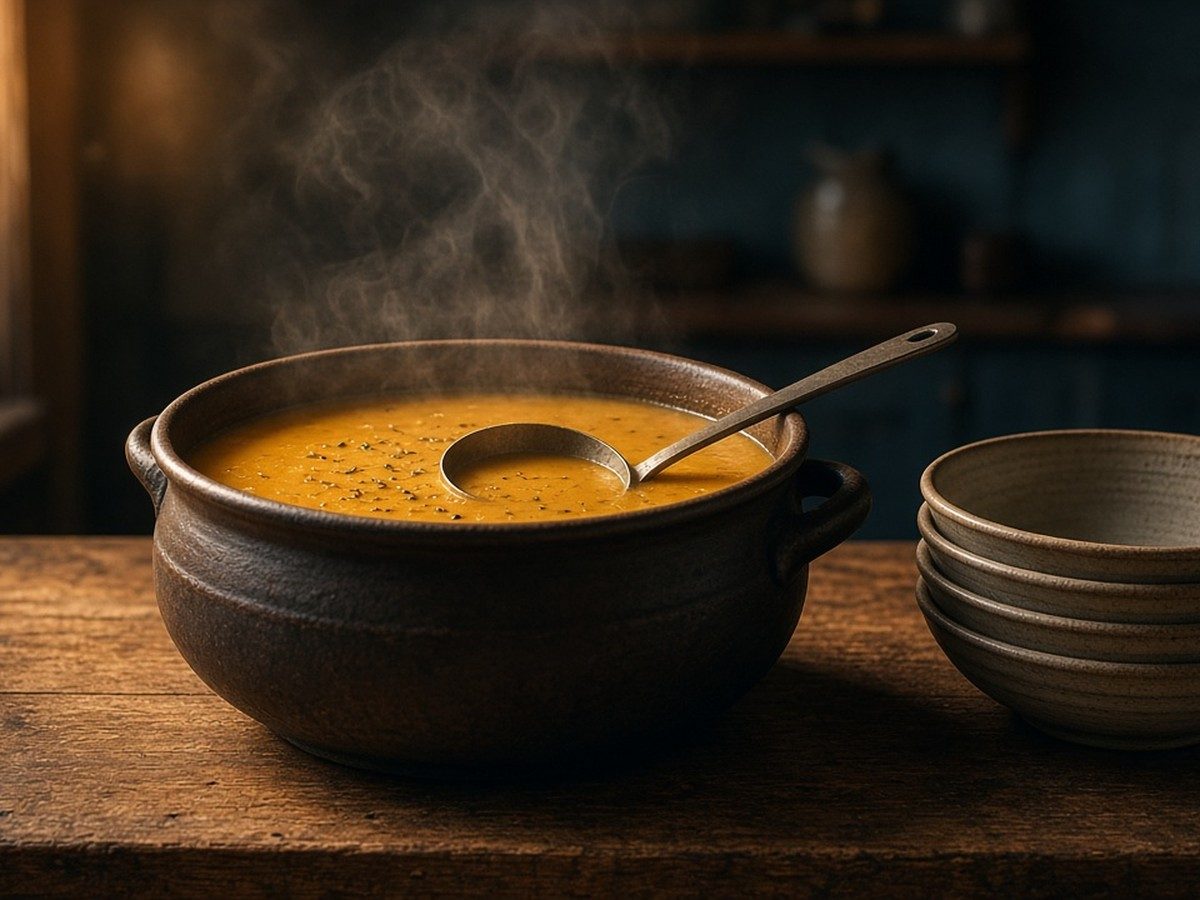
I first understood dāna with my hands in a sink. I volunteer now in kitchens for homeless people, and I have written about a slower mind at the sink. In that kitchen nobody is comparing bowls of soup. I have little of my own, yet I know I have enough to be happy, which the boy who ran crash tests would never have believed.
The law I live by now

That boy has not gone anywhere, and I no longer try to hide him. I’ve come to understand my life through the law of karma, of cause and effect. The way I see it, what I do with intention plants seeds, and they ripen. When something goes against my wishes, I often find I once did something like it to someone else.
That isn’t a punishment I fear. It’s a mirror. When something doesn’t go my way, I sometimes remember a boy who talked his neighbour into crash tests.
I wrote about the neighbour from number five once before, in Love Fully, Hold Loosely. In my head, he’s still there. He was never in the race. I was.
Can you?
In a few weeks the deals will start shouting again, and the scoreboard will be waiting. I won’t tell you what to buy or what to leave on the shelf.

I’ll only pass on the question I’m asking myself this year. When you choose a gift for someone, who is it really for? And could you give it, and want nothing back?