
When I was giving up alcohol, I needed something to do with myself. The easy thing was the phone. Scroll Facebook, let the feed decide what went into my head. And the feed had opinions. One advert after another told me that the way to face your fear is to jump out of a plane. Strap in, count to three, fall, and come back a new person.
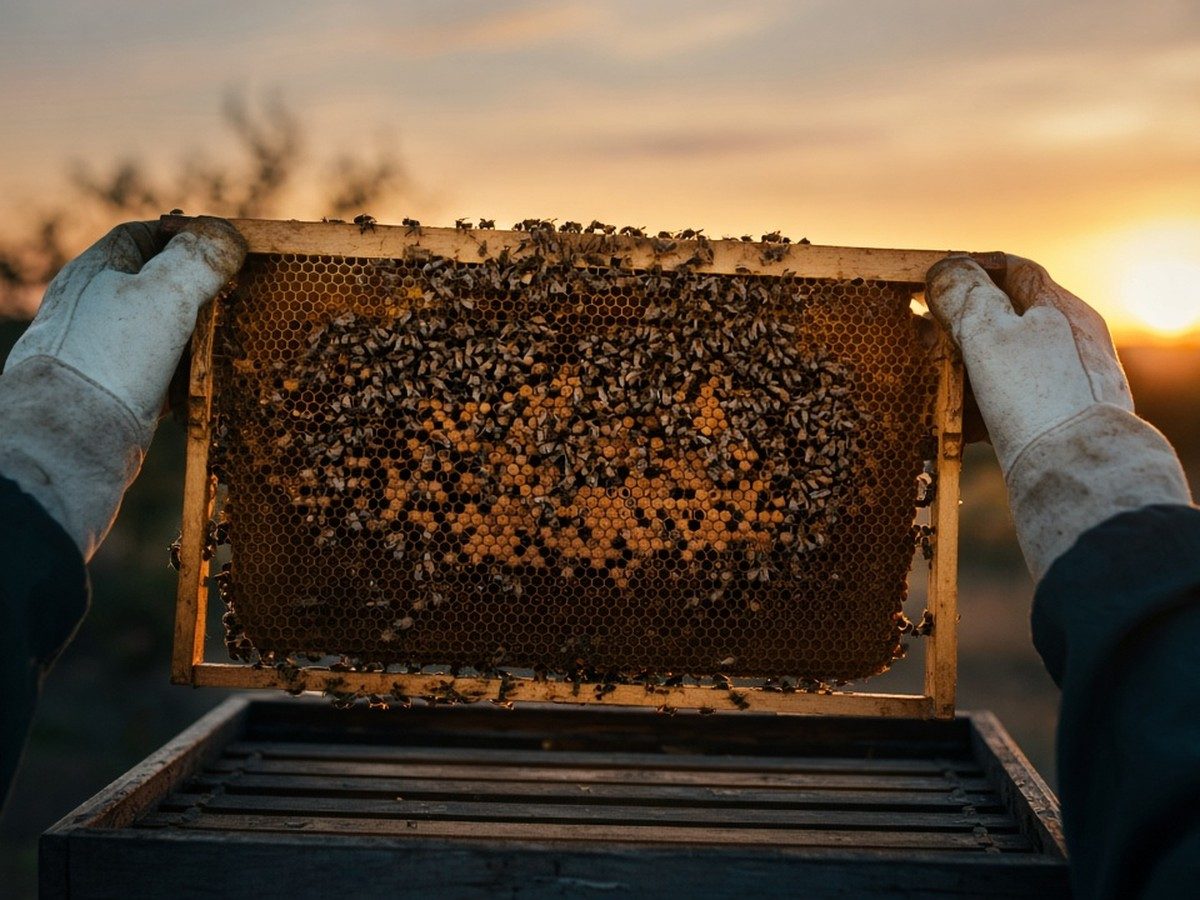
I didn’t jump. I became a beekeeper. Beekeeping is a buzzing hobby, but the buzz belongs to the bees, not to an adrenaline rush.
I want to be fair here, because this isn’t a story against anyone. There is nothing wrong with skydiving. People jump, and for some of them it really is the moment they meet their fear and walk away changed. I’m glad it works for them. The adverts just didn’t speak to me. I didn’t need one big moment in the sky. I needed something I could come back to, again and again, with nobody watching.
Facing fear without adrenaline
You can face fear without adrenaline by staying with it slowly instead of trying to beat it fast. For me, that meant doing something patient and repeated, until the fear had less and less to say.
Around bees, fear is honest. A colony is thousands of animals that can sting, and they notice when you rush. So you learn to move slowly, keep your breathing low, and let your hands stay calm even when your stomach isn’t. Nobody films it. There is no certificate at the end. There is just the next time you lift the lid, and the time after that.
Giving up alcohol felt a lot like that to me. It wasn’t one heroic leap. It was a long line of small, quiet returns. I’m not saying bees are a cure for anything, and I’m not telling anyone what to do. This is only what I did. The bees were where I put my attention instead of a glass, and instead of a screen full of adverts. I wrote more about the years of reaching for things in What I reached for, and what finally held.
Every bee has its own job, and every path is its own
In a hive, a worker bee’s job changes as she gets older. In her first days she cleans out cells. Then she becomes a nurse and feeds the young. After that she makes wax and builds comb, takes in the nectar other bees bring home, and does her turn guarding the entrance. Only in the last part of her life does she fly out to forage. Nobody hands her a leaflet or tells her she should already be flying. She does the work that fits where she is.
I think about that when people ask about my practice. I’m a Buddhist. I practise Nichiren Buddhism with the Soka Gakkai International (SGI), and most mornings I chant Daimoku, Nam-myoho-renge-kyo. SGI encourages people to share the practice. But I don’t push it on anyone. What speaks to me might not speak to someone who is in the middle of their own change right now.
Nichiren Buddhism has an image for this: cherry, plum, peach and damson. Each tree blossoms in its own way and in its own season, and none of them has to become another tree to be complete. The bees live that without saying a word. The nurse bee isn’t failing at being a forager. She is exactly where she is meant to be today.
So that’s my way. I chose Buddhism. I don’t think it’s the only door, and I don’t need you to walk through mine. I wish everyone finds their own path. For some people it starts in the open door of a plane. For me it started with the slow hum of bees and the smell of wax.
What the bees keep teaching me
Courage doesn’t always look like a leap. Sometimes it looks like standing still near something that frightens you and breathing until your hands stop shaking. Sometimes it’s saying no to a drink today, and then again tomorrow. Nobody claps for that. It still counts.
The bees don’t know any of this, of course. They just keep working, each one at her own job, each one at her own age. Watching them, I stopped comparing my pace with anyone else’s.
When you need to face something, what is the quiet thing you could come back to tomorrow, and the day after that?
Read next: A Slower Mind at the Sink · A Zen café with Polish soul
— Rafik